
Forty years. Billions of dollars. One question:
“Did the salesperson do the thing?”
We removed the question.
SeeRM. The floor, finally digitized. Not the filing cabinet.
The question
Every CRM ever sold exists to answer it.
A thousand reports over ten thousand fields, all pointed at one anxiety: did my salespeople do what they were supposed to do? It is surveillance with a CRM logo, and every salesperson on every floor knows it.
And the industry has spent forty years getting worse at answering its own question. Because the instrument requires a salesperson to feed it, and salespeople are good with humans, not forms. That’s the type, not a discipline failure. So they feed it the minimum, a data-entry tax paid to prove they worked. The minimum breaks every report. And a GM who can’t trust a single report he pulls slowly comes to resent the very people he depends on to sell.
Elead. DP360. VinSolutions. DealerSocket. Same bet, different logo: more fields, more compliance, more reports pointed at catching the seller not-working.
That’s not a software problem. That’s a dignity problem software caused: a profession of people good with humans, turned into resented clerks, their talent invisible because the only instrument ever pointed at them measured compliance instead of selling.
So we built the opposite instrument. You don’t fix the salespeople. You delete them from the data path. The pipeline populates itself from what the seller actually did. Ask where you stand and what it takes to hit 300 this month, and you get the truth, because the truth was never a thing a human had to type. It was always sitting there in the work, waiting for something that could read it.
The CRM is a monument to the tired human in the middle. We made the tired human optional.
The read
If you think human behavior can’t be measured, have a look.
This is your hand, right now, sampled 50 times a second. Move it. The line is your speed; the column is what the instrument makes of it. It is the same climb Seer makes on every visitor to every store, reduced to the part a browser can do honestly on its own.
Every visit is read. The ones that are not people are set aside before anyone’s time is spent on them.
Watch Seer see, the whole climb →The animal
There’s a parrot by the phone. This is a border collie.
Every “AI for dealerships” pitch you sat through this year is the same bird. They taught a parrot your inventory and parked it by the phone. Ask it a question and it repeats what it was fed. Politely, even. But it waits to be asked. That is the whole design: an answering machine with a personality prompt, wearing your logo.
A border collie does not wait. It reads the field. It notices the stray before you knew one was missing, and it has the flock moving while you pour your coffee. In the entire history of working dogs, nobody has ever asked a border collie where the sheep are.
That is the difference, and it is the whole difference. Theirs answers the buyer who shows up with a question. Ours reads the buyer while they move: the price they circled back to twice, the tow rating they froze on at 1:35 in the morning, the “dead” lead who just walked back onto your site after eleven quiet days. It moves first, in your store’s own voice, and hands your closer a buyer who is already warm.
You ask theirs for information. Ours found it first and handed it over before anyone thought to ask.
The test
One question to ask any system that wants to run your floor. Ours included.
Does a human have to type into it to make it true?
If the answer is yes, you are looking at a filing cabinet with a login screen, however new the AI sticker on the drawer.
Waiting for someone to type.
An illustration of one buyer’s record, not a real one.
The record
Here, the record fills itself from what actually happened. The lead arrives carrying the buyer’s own words. The texts sit on the card exactly as they were sent, timestamped. The close is on the board the moment it closes. Buyers don’t pay a toll of forms to get helped. Sellers don’t pay a tax of fields to prove they worked.
Nobody feeds this machine. Not your buyer. Not your rep. The record is exhaust.
The day
8:07 on a Tuesday. Coffee.
The floor is already in order. Not a task list somebody owes the machine; an order the machine owes your floor. The deal most worth a human being right now sits where a hand falls first. The overnight follow-ups already went out, each one composed for that buyer from what that buyer did. None of them a template. What needs a decision, glows. Everything else is already handled, and says so.
- OvernightTwo web leads overnightBoth answered within a minute, in the store’s voice
- OvernightMarcusBack on the RZR XP for the third time since Sunday. Call at 9:00
- OvernightFollow-upsEleven went out at 6:02 AM, each written for that buyer
- OvernightJen and TomOffer on the table: $41,500 on the Imagine 2600RB. Needs your yes
- OvernightDanaBooked Saturday, 10:00 AM
- OvernightPrice dropThe Ranger he watched dropped $1,200. He has been told
An illustration of one seller’s morning, not a real floor.
Your sellers work deals. The cadence runs itself. The order is the to-do list.
The shout
Real showrooms solved information sharing fifty years ago.
Every CRM in this industry brags about the same feature: “Everyone can see everything! Total transparency!” Translated: your entire customer list, pre-packaged and gift-wrapped for the next salesperson who quits.
A rep shouts across the floor: “Anyone working Suzy Steinhouse?”
And Steve calls back: “That’s my up. Sold her a 16EV in March. Told her it was disposable and to call me when it disintegrates.”
Notice what just happened. The record never left the drawer. The story crossed the floor, in Steve’s voice, on Steve’s terms. That’s not a limitation. That’s the etiquette that kept a sales floor honest for half a century.
So that’s what we built. Not a search bar. The shout. A seller searches a name. Their own customer: everything, instantly. A teammate’s: one line. “That’s Steve’s buyer.” And one button that taps Steve on the shoulder so Steve can tell the story. Nothing to browse. Nothing to export. Nothing walking out the door with anyone’s two weeks’ notice.
Your CRM calls it transparency. Your departing rep calls it severance.
The match
You know the guy. He always got the number.
Restaurant, grocery store, library. Didn’t matter. He wasn’t guessing. He was reading. Everyone has always agreed the gift exists (“he’s just got it,” “she reads people”), and everyone has always filed it under unmeasurable. For forty years, the only instrument ever pointed at that seller graded his typing.
We measured the gift. Both sides of it.
How ready a buyer actually is, read from how they behave, not from what a rep remembered to log. And which of your people closes exactly that kind of buyer, learned by watching who actually closes whom. Nobody fills out a form. It just knows.
The forecast is those two numbers multiplied. “Twenty deals in the pipeline” was never a forecast; every deal counted equal, because the cabinet can’t weight them. A ready buyer in the wrong hands is a deal at risk. The same buyer in the right hands is money. Same temperature, opposite outcome. The only difference is the match.
A deal at risk.
An illustration of the arithmetic, not a real forecast.
The buyer’s mood, you can’t control. Which rep is holding the deal, you can.
It doesn’t just predict your number. It tells you what to do to hit it.
The team
Every one of them is real, live, and answering right now.
Not a logo scroll. A roll call. Each of these is a teammate a dealer named and put their store’s face on, working a real floor at this hour. Not a chatbot with the dealer’s colors bolted on. A person the shopper asks for by name. That is the thing no template ships and no competitor clones.








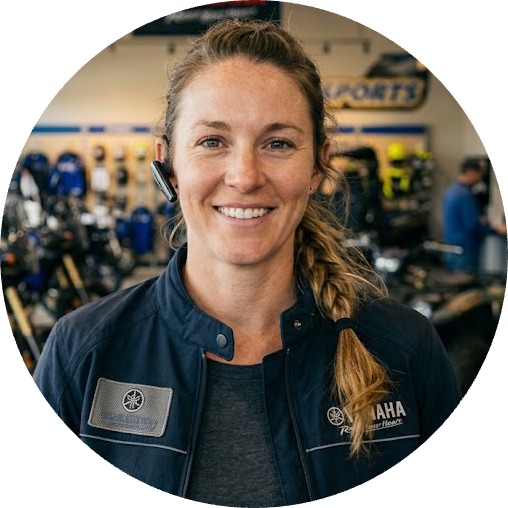
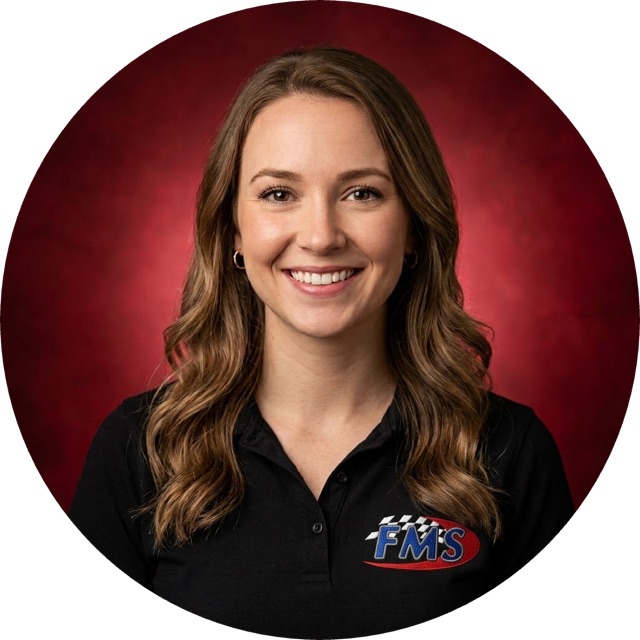


Every floor on this wall has one thing in common: they don’t call it “the bot.” They call it by name.
Stores on this wall arrived from every incumbent in the category: the CRM, the texting platform, the voice bot. Two came off the loudest one in the same week. Ask them why.
The proof
A roll call is a claim. Here is one of them, thinking.
This is not a testimonial and not a highlight reel. It is one real session off the floor, read by the instrument as it happened. No name, no unit, nothing that points back to a person. Just the shape of the read, and whether the read was right.
A destination shopper out of Kansas City spent two minutes on the floor. Pragmatic, unhurried. Ten messages in, the instrument recognized the shape from fifteen prior conversations that walked the same way, named the pattern, and steered toward commitment. It called the close four messages out.
Four messages later, they converted.
- Pattern
- The Pragmatic Planner
- Approach
- Confident tone
- Similar cases
- 15 matches
- Buyer
- Kansas City, MO · destination
- Confidence at the read
- 66%
15 of 15 similar sessions in the neighborhood converted (average similarity 0.54). In those neighbors, the close landed about four messages from this point. It landed here in four.
One real session · anonymized to city and pattern · confirmed against what actually happened.
It doesn’t just answer the buyer. It knows where the conversation is going.
The lies
Fifty years of promises, examined one at a time.
One lie at a time. There are fifty years of them. Enter the museum →
Why I built it
I can build this because I am the seller. I hate data entry. I resent big brother. I’m a seller first and a developer second, and I’ve spent fourteen months proving that the thing I always wanted to exist actually can.
The talented seller who’s been buried under the data-entry tax becomes visible here for the first time. Not caught. Seen. This is the first system in the history of the category whose posture toward the salesperson is I’m here to make you better and watch your back, not I’m here to catch you slacking. A CRM that listens finds what a CRM that surveils never could.
The reason nobody built it in forty years isn’t that the vision was hard to see. It’s that the constraint was a tired human in the middle of it. And that constraint just disappeared.
This isn’t positioning. It’s autobiography.
Matt Kiselstein · Founder & CEO, SentientIQ, Inc.
The floor is open
You don’t bail out of anything on faith.
Keep the system you have as the record book if you want. Use it as the filing cabinet it is. From the day SeeRM turns on, your floor gets read, your leads get worked, and your forecast gets weighted. The parts that learn your people sharpen over your next few weeks of closes, on a confidence meter you can watch, so you’re never trusting a number you can’t see earn itself.
And if what your store actually needs is a $1,000 chatbot, take that deal. This isn’t that.
No form. You’ve read enough of this site to know why.