
Seer · reads the room
seer2/see-er/
A presence that perceives what is already true. It reads a buyer from how they move, before a word is typed.
Not a prophet. It foretells nothing. It watches the present at a scale no person can, and reaches the buyer about to leave.
The salesperson who always got the deal read the room: the hesitation, the second look, the moment someone was about to walk. You could never teach it. Now you can deploy it.
This is one real visitor, one live session. No form, no chat box, no question asked. Watch what Seer reads from nothing but how they move.
No form. No question. Nobody typed a thing.
The hand on the mouse said it first.
That read is what told Seer how to open.
Now point the same read at all of them.
Your analytics counts sessions and hands you a conversion rate. But a rate is a fraction, and nobody audited the bottom of it. Every report you pay for trusts the same source to decide who was even a person before the math starts. On a web that just crossed half bot, that is the number hiding under all of it.
A chatbot only knows the people who typed. Seer reads the whole floor, one level down.
Meet them in the moment, or meet their voicemail.
Seer is watching what your site does to them.
One buyer, one minute, two doors. Press play and watch the first one unfold: the gate, the form, the labor. Then watch the same buyer walk through the other. The runtime length is the argument.

No login, no form.
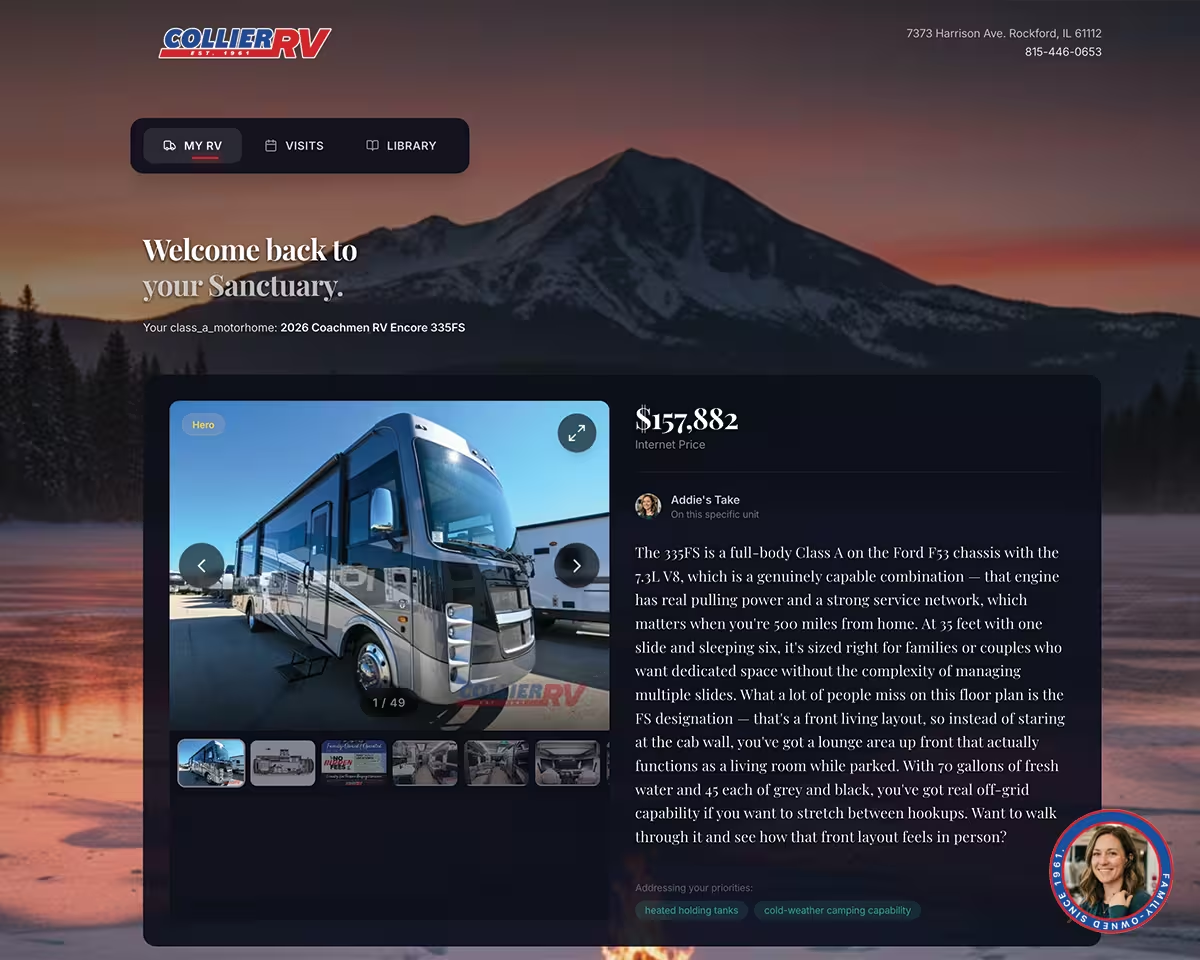
Not a portal to log into. Not another dashboard. A single page Seer composes for one buyer: the specific RV they were circling, the real towing and payment numbers, a named specialist’s read on it. Then it drops in their inbox. A quiet place to think, instead of a countdown timer.
distress or uncertainty
Conversions in high-consideration purchases aren’t celebrations. They’re capitulations under cognitive load. When half of buyers cross the line in distress, the ethical response isn’t to push harder.
It’s to give them a room and turn the lights down.
No pressure. No countdown. A room with his name on it.
No one has ever opened the box like this.
I didn’t get routed. I didn’t start over.
I replied to the one who already knew the deal.
The loop was always listening. Now it talks back.
Dan wants the Cedar Creek 385 RK specifically. He didn’t bite on the 39RKB at $82,966 even though it was presented clearly. He’s waiting on a real ETA, not a sales pitch. Lead with a concrete arrival window or dealer trade update. He’s low-friction but also low-engagement, so keep it brief and factual.
- • 385 RK not in stock
- • no confirmed arrival timeline yet
“Dan, while we’re tracking down the 385 RK, is there a timeframe you’re hoping to have it by, or are you flexible on timing?”
Dan, I told you our team would reach out with an update on the 2026 Forest River Cedar Creek 385 RK availability and a real ETA. If the team already reached you, great, disregard this entirely.
Dan, I wanted to give you an honest update. I don't have a confirmed arrival date yet, but I'm actively tracking it through our network, dealer trades included. The moment I have a real ETA, you'll be the first to know.
Brain is evaluating signals before scheduling the next touch. It will fire when the timing is right.
They didn’t search by brand, price, or length.
They typed a stock number they brought with them.
The highest-intent shape a returning shopper can take.
This is marketing at the speed of emotion.
- 1.
a presence that perceives what is already true: reading a buyer from behavior before a word is typed, and reporting the floor no one you pay has a reason to show you.
- 2.
not a prophet. It foretells nothing. It watches the present at a scale no person can, and says what it sees.
redefined, from seer¹ · one supposed to see what the future holds.
The Read is blind to nothing in the buyer’s emotion. The same instrument, pointed at your paid traffic, sees something your agency’s report may not: how much of the spend was spent before a human ever showed up.
The human side of this campaign behaved cleanly. Every session reached a VDP, friction was zero. The problem is that just under half the budget was absorbed before a human ever showed up.
Half my budget was spent before a human showed up. Worth a conversation with whoever runs the campaign, and whether this rate has been visible in the reporting you already get, or only shows up here.
It’s the same engine behind the bot-detection receipt above: our proprietary bot/human classification, pointed at the ad spend instead of the buyer’s emotion. A meter you never had. We hand you the meter; the diagnosis is yours.
Your website has been a billboard. A page that looks the same to everyone who lands on it, says nothing back, and forgets them the moment they leave.
Seer makes it perceive. The same instrument pointed three ways: the read no form can fake, the private page no login gates, the meter on your ad spend. One thing ties them together. Every one of them is a fact nobody in your stack has a reason to hand you.
You’re not cynical. You’re starved for the truth. It just has never been shown to you by someone that wasn’t selling something.
The first thing in your stack with no reason to lie to you.
We don’t hand you a verdict to take on faith. We hand you the meter.
No new dashboard to check, no login to remember. Every morning the work of the night before arrives as one short read: the deals moving, the buyer worth a call, the pattern worth an eyebrow. The way a great floor manager would brief you, if you had one who watched every visitor at once.
Yesterday produced 9 deals in progress and one outcome worth telling you about. JR, you remember, the Talon 1000R-4 conversation last week, opened his OTD email at 7:14 AM and called the store at 9:02. Sierra has him on the schedule for Saturday.
One pattern worth a raised eyebrow: three different shoppers asked about the Matte Navy Blue across three different units. If you’ve got room in the next order, this is a signal.
A chatbot waits to be clicked. Seer is already working your floor.
We don’t use forms. We don’t believe in them. Schedule with Seer.